
Solar-Ready Homes in the Philippines: What Homeowners Should Know Before Installing Rooftop Solar
With electricity costs continuing to affect Filipino households, many homeowners are now considering rooftop solar panels as a way to reduce monthly power expenses. But before installing solar panels, one important question should be asked first:
Is the house actually ready for solar?
A solar power system is not just an appliance that can be attached to any roof at any time. It affects the roof, electrical system, structure, waterproofing, safety, and future maintenance of the home. This is why solar-readiness should ideally be considered during the design, renovation, or construction stage.
Recently, rooftop solar became a timely topic in the Philippines after Meralco called for stricter regulation of unregistered or so-called “guerrilla” solar installations. The concern is not simply about paperwork. The issue involves fire safety, electrical safety, grid compatibility, and proper installation standards.
At the same time, government agencies have also been pushing to make net-metering approvals faster, making legal and properly documented solar installation more accessible to qualified homeowners. This makes the topic very relevant today: solar can be a smart investment, but it must be planned and installed properly.
Why Rooftop Solar Is Becoming Popular in the Philippines
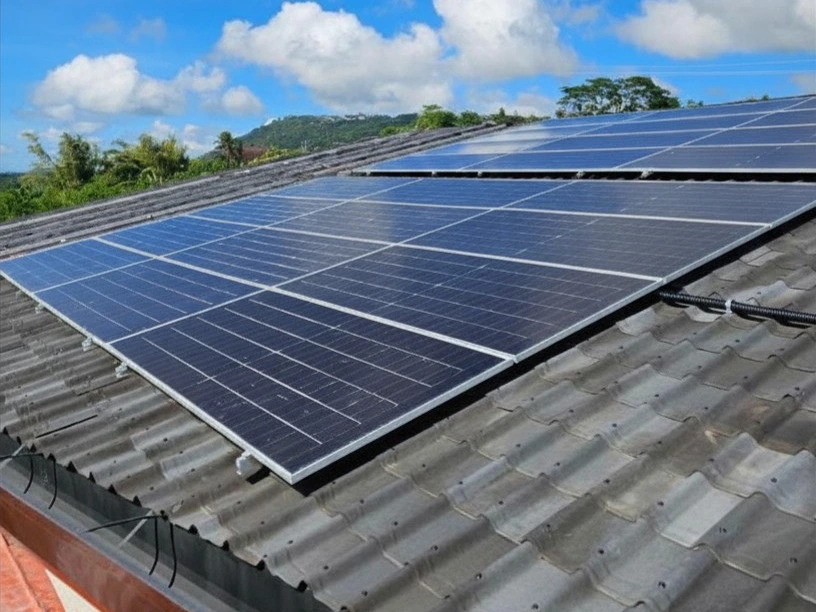
Many Filipino homeowners are looking for ways to lower electricity bills. Rooftop solar is attractive because it allows a home to generate part of its own electricity during daytime. For some households, this can help reduce dependence on grid-supplied power.
In simple terms, solar panels convert sunlight into electricity. This electricity may be used by the house during the day. If the system is connected through an approved net-metering arrangement, excess electricity may be exported to the distribution utility and credited to the customer’s bill, subject to the applicable rules and requirements.
But while the idea sounds simple, the actual installation involves several professional considerations.
| Common Homeowner Assumption | What Homeowners Should Understand |
|---|---|
| “Solar panels can be placed on any roof.” | The roof must be checked for orientation, space, shading, structural capacity, condition, and waterproofing. |
| “Solar is only an electrical concern.” | Solar also affects architecture, roofing, structure, waterproofing, maintenance access, and construction planning. |
| “The cheapest installer is enough.” | Solar installation should be safe, compliant, properly documented, and coordinated with qualified professionals. |
| “Permits are just delays.” | Permits, inspections, and utility coordination help protect the homeowner, the property, and the electrical grid. |
What Is a Solar-Ready Home?
A solar-ready home is a house prepared for future rooftop solar installation. This preparation may happen during the design stage, during construction, or before a renovation.
A solar-ready home considers the following:
| Solar-Ready Feature | Why It Matters |
|---|---|
| Proper roof orientation | Solar panels perform better when they receive good sunlight exposure with minimal shading. |
| Enough usable roof area | The roof should have enough clear space for future panels, without too many obstructions such as vents, tanks, or unnecessary roof breaks. |
| Strong roof framing | The roof structure should be checked to see if it can safely carry additional solar panel loads and mounting systems. |
| Good roof condition | Installing solar panels on an old or leaking roof may create more problems later, especially if the roof needs replacement soon. |
| Planned electrical provisions | Conduit routes, panel board capacity, grounding, and service entrance coordination should be considered early. |
| Space for inverter and equipment | Solar equipment should be placed in an accessible, ventilated, and protected area. |
| Waterproofing details | Mounting solar panels may involve roof penetrations or attachments, so waterproofing must be planned carefully. |
| Permit-ready documentation | Proper drawings, inspections, and requirements help make the approval process smoother. |
Why the Meralco Solar Issue Matters to Homeowners
Meralco recently pushed for stricter rules against unregistered rooftop solar installations, sometimes referred to in reports as “guerrilla” solar installations. The concern is that improperly installed or undocumented systems may create safety and grid-related risks.
For homeowners, this should not be seen simply as a restriction. It should be seen as a reminder that rooftop solar must be installed responsibly.
What Are the Risks of Improper or Unregistered Solar Installation?
Some homeowners may be tempted to install solar panels quickly through informal arrangements, especially when the promise is immediate savings. However, a poorly planned system can create long-term problems.
| Possible Issue | Possible Consequence | Why It Matters to the Homeowner |
|---|---|---|
| Poor wiring or unsafe connections | Fire risk, overheating, electrical faults, or electrocution risk | The home’s safety may be compromised. |
| Non-compliant inverter or equipment | Grid compatibility problems or failed approval | The system may not be accepted for proper interconnection. |
| No proper inspection or documentation | Problems with permits, utility approval, insurance, or future property sale | The homeowner may face complications later. |
| Weak or unchecked roof framing | Roof deflection, damage, or long-term structural issues | Solar panels add load to the roof system. |
| Poor mounting and waterproofing | Roof leaks during heavy rain | Water damage can become costly to repair. |
| No maintenance access | Difficult cleaning, inspection, or repair | Future maintenance becomes unsafe or inconvenient. |
| Improper grid connection | Backfeed or utility safety concerns | This can affect not only the property but also utility workers and the distribution system. |
Net-Metering Explained in Simple Terms
Net-metering is a program under the Renewable Energy Act, or RA 9513. In simple terms, it allows a qualified customer to install a renewable energy system, such as rooftop solar, within the property. When the system produces more electricity than the home uses at that time, the excess electricity may be exported to the distribution utility and credited to the customer’s bill.
For Meralco customers, Meralco explains that net-metering applies to renewable energy facilities with a capacity of up to 100 kW. Any excess renewable energy exported to Meralco is given a corresponding credit on the next bill, subject to the applicable rules and process.
Solar-Ready Planning for New Homes
The best time to prepare for solar is before the house is built. Even if the homeowner does not plan to install solar panels immediately, the house can be designed to make future installation easier and cleaner.
1. Roof orientation and roof design
Solar panels need good sunlight exposure. A roof with too much shading from nearby buildings, trees, parapets, or roof obstructions may reduce solar performance.
During the design stage, the architect and engineers can help plan a roof that is more solar-friendly. This may include reducing unnecessary roof breaks, planning equipment locations, and avoiding obstructions in areas that may be used for panels.
2. Structural preparation
Solar panels, rails, mounting systems, and related equipment add load to the roof. The structure should be checked by qualified professionals to confirm whether it can support the additional load safely.
For new construction, this is easier to plan because the structural design can already consider possible future solar installation.
3. Electrical planning
Solar installation involves the home’s electrical system. This may include the panel board, grounding, service entrance, conduit routes, protective devices, inverter location, and future maintenance access.
If provisions are planned early, the future installation may look cleaner and may require less hacking, rewiring, or exposed conduits.
4. Space for inverter and equipment
Solar systems often require an inverter and related equipment. These should be placed in a safe and accessible area. The space should be protected from direct rain, excessive heat, flooding, and accidental damage.
5. Waterproofing and roof access
Roof leaks are one of the most common homeowner concerns after rooftop works. Solar mounting should be coordinated with proper waterproofing details. There should also be safe access for installation, cleaning, and future inspection.
Solar-Ready Checklist for New Homes
- Plan a roof area with good sunlight exposure.
- Avoid unnecessary roof obstructions where panels may be installed.
- Ask the structural designer to consider future solar panel loads.
- Provide possible conduit routes from the roof to the electrical area.
- Plan a protected and accessible location for inverter and equipment.
- Coordinate waterproofing details for future panel mounting.
- Provide safe access for future roof maintenance.
- Keep architectural, structural, and electrical drawings organized for future permit use.
Solar-Ready Planning for Existing Homes
For existing houses, the first step should not be buying solar panels. The first step should be assessment.
Many homes were not originally designed with solar installation in mind. The roof may be old, the framing may need checking, the electrical system may need upgrading, or the roof layout may not be ideal.
| What to Check | Why It Is Important |
|---|---|
| Roof age and condition | If the roof is already old or leaking, repairs or replacement may be needed before installing panels. |
| Roof framing | The roof structure must be checked if it can safely carry the added solar load. |
| Existing electrical system | Older homes may need electrical upgrades before solar installation. |
| Available roof area | The roof must have enough usable space with good sun exposure. |
| Shading from trees or nearby buildings | Shading can reduce solar production. |
| Waterproofing condition | Solar mounting may worsen existing roof leaks if not handled properly. |
| Permit and utility requirements | Documentation and inspection requirements should be prepared before interconnection. |
What Documents or Requirements May Be Involved?
Requirements may vary depending on the distribution utility, local government unit, system size, property type, and current rules. However, homeowners should expect that legal and proper solar installation may involve documents and inspections.
Meralco’s net-metering application process includes submission of required documents, and its public information states that a Certificate of Final Electrical Inspection, or CFEI, is part of the application requirements. The CFEI is issued by the local government unit.
| Possible Requirement | Purpose |
|---|---|
| Application form | Starts the net-metering application process with the distribution utility. |
| Electrical permit | Helps ensure that the electrical work is reviewed and documented. |
| Signed and sealed electrical plans or single-line diagram | Shows how the solar system connects to the home’s electrical system. |
| Certificate of Final Electrical Inspection or CFEI | Confirms that the installation has undergone final electrical inspection by the LGU. |
| Equipment information | Helps verify that the system and components are suitable and compliant. |
| Utility inspection or evaluation | Checks safety and compatibility before interconnection or net-metering approval. |
Why Solar Should Be Coordinated With the Architect, Engineer, and Contractor
Solar installation is often marketed as a product purchase, but for a house, it is also a construction and technical coordination matter.
The architect, engineers, contractor, and solar provider should ideally coordinate because each professional sees a different part of the issue.
| Professional / Party | Role in Solar-Ready Planning |
|---|---|
| Architect | Coordinates roof design, space planning, aesthetics, maintenance access, and integration with the overall house design. |
| Structural Engineer | Checks whether the roof structure can carry the additional load of panels and mounting systems. |
| Electrical Engineer | Reviews electrical capacity, safety, grounding, panel board requirements, and system integration. |
| Contractor | Executes roof, structural, waterproofing, and electrical provisions according to approved plans and specifications. |
| Solar Provider / Installer | Designs and installs the solar PV system, panels, inverter, and related equipment based on site and utility requirements. |
| LGU and Distribution Utility | Processes permits, inspections, and interconnection or net-metering requirements. |
Common Mistakes Homeowners Should Avoid
Avoid These Solar Planning Mistakes
- Installing solar panels without checking the roof structure.
- Installing panels on a roof that already needs repair or replacement.
- Ignoring waterproofing details during panel mounting.
- Using non-compliant or questionable equipment.
- Proceeding without proper electrical review.
- Assuming net-metering approval is automatic.
- Choosing only based on the cheapest quotation.
- Failing to coordinate with the LGU, utility, and qualified professionals.
- Not keeping proper documentation for future repairs, sale, insurance, or inspection.
Should Every Home Install Solar Panels?
Not always. Solar may be useful for many households, but it should still be studied based on the actual home, lifestyle, roof condition, budget, and electricity usage.
A homeowner should consider:
- How much electricity the household uses during daytime
- How much usable roof area is available
- Whether the roof receives enough sunlight
- Whether the roof is structurally ready
- Whether the electrical system is ready
- How long the homeowner plans to stay in the property
- The expected payback period of the solar investment
- The cost of permits, upgrades, and maintenance
In many cases, the better approach is to make the home solar-ready first, then install the solar system once the homeowner has the budget, proper documents, and a qualified provider.
Solar-Ready Does Not Mean Solar-Only
A well-designed home should not depend on solar panels alone to become efficient. Solar is only one part of a bigger strategy.
Before installing solar, homeowners should also consider reducing unnecessary energy demand through better design and construction.
| Energy-Saving Strategy | How It Helps |
|---|---|
| Proper window placement | Improves daylight and ventilation, reducing daytime lighting and cooling needs. |
| Roof insulation | Reduces heat transfer from the roof into the living spaces. |
| Shading devices | Helps block harsh sun before it enters the house. |
| Cross ventilation | Allows natural airflow and reduces dependence on mechanical cooling. |
| Efficient lighting and appliances | Reduces overall electricity demand. |
| Light-colored roofing or finishes | May help reduce heat absorption, depending on the material and application. |
Final Thoughts
Rooftop solar can be a smart step for many Filipino homeowners, especially with rising interest in energy savings and renewable power. However, solar installation should not be rushed or treated as a casual add-on.
A safe and effective solar installation starts with a home that is properly prepared. The roof must be checked. The electrical system must be reviewed. The structure must be considered. Waterproofing must be protected. Permits and utility requirements must be followed.
In short, a solar-ready home is not just about saving electricity. It is about planning responsibly.
Planning to Build or Renovate a Solar-Ready Home?
RCA Build Pro Construction OPC can help homeowners plan and build homes with future-ready considerations, including roof planning, construction coordination, renovation works, structural and electrical coordination, and design-and-build services.
Before installing solar panels, make sure your home is ready — not only for potential energy savings, but also for long-term safety, performance, and compliance.
Contact RCA Build ProReferences
-
GMA News. “Meralco advocates stricter implementation of rules against ‘guerrilla’ solar installations.” Published May 8, 2026.
https://www.gmanetwork.com/news/money/companies/986981/meralco-rules-solar-installations/story/ -
Daily Tribune. “Meralco seeks crackdown on ‘guerrilla’ solar installations.” Published May 7, 2026.
https://tribune.net.ph/2026/05/07/meralco-seeks-crackdown-on-guerrilla-solar-installations -
Department of Energy. “DOE: Whole-of-government push speeds up net-metering permits, approvals, and benefits.” Published February 1, 2026.
https://doe.gov.ph/articles/3281199–doe-whole-of-government-push-speeds-up-net-metering-permits-approvals-and-benefits -
Philippine Information Agency. “DOE speeds up net-metering application process to 10 days.” Published April 8, 2026.
https://pia.gov.ph/news/doe-speeds-up-net-metering-application-process-to-10-days/ -
Meralco. “Solar & Net-Metering.”
https://www.meralco.com.ph/residential/electric-service/solar-net-metering -
Meralco. “Application Process – Solar & Net-Metering.”
https://www.meralco.com.ph/residential/electric-service/solar-net-metering/application-process